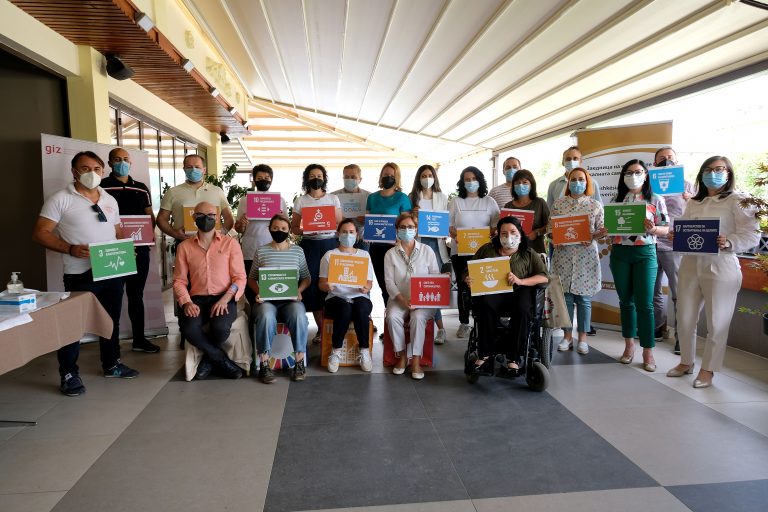
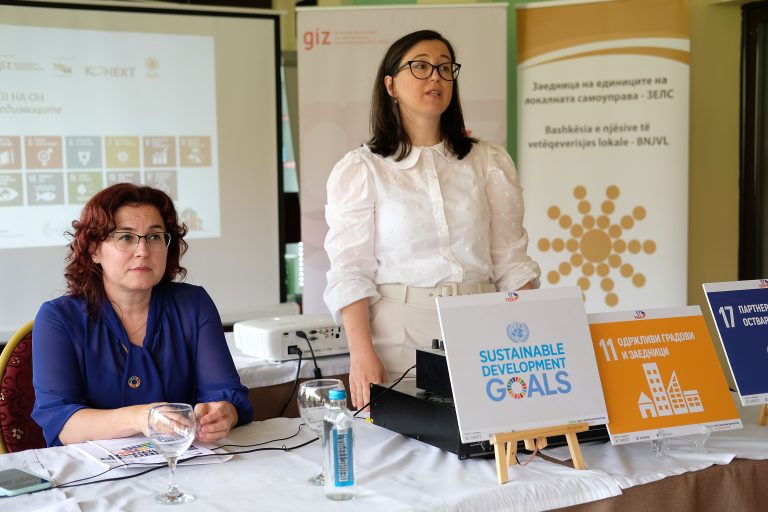
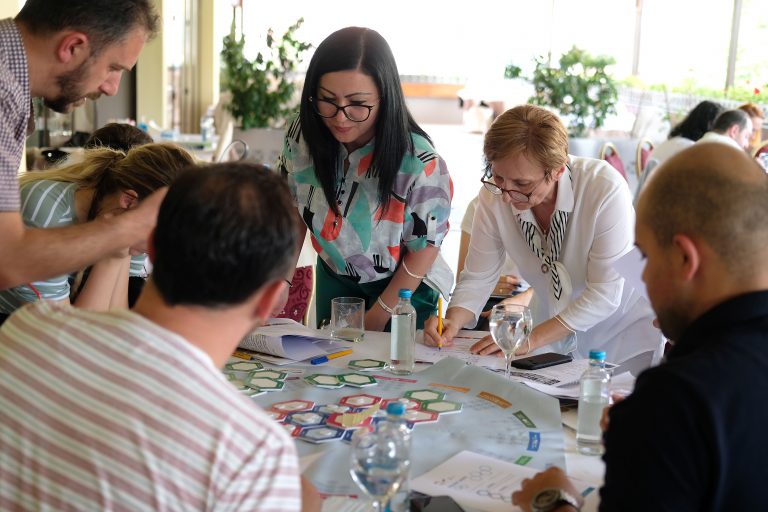
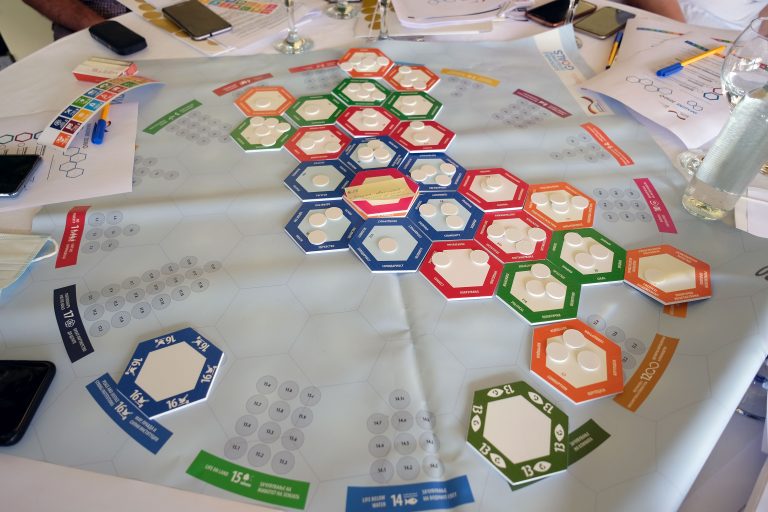
ZELS in partnership with Konekt supported by GIZ sent an invitation to all municipalities in the country through a public call, from which 4 municipalities were selected to participate in a series of workshops where Agenda 2030 and the Sustainable Development Goals in general were promoted. The representatives of the municipalities, the civil sector, state institutions, the councillors from the municipal councils jointly, using a package of tools developed by GIZ, through a series of trainings conducted by Konekt helped in defining specific goals that are a priority for each of the municipalities.
After the need to locate the most endangered socially vulnerable groups in the municipalities was concluded, ZELS again through a public call invited the municipalities to get involved in social mapping, which measures the exclusion of vulnerable groups based on 5 risk factors. These factors are part of the intersectional approach of the “Leave No One Behind” principle and provide a more detailed image of vulnerability in a way that allows targeted creation of policy measures.
For example, through this GIZ methodology, we consider vulnerability not only through the risk factor of discrimination or the socio-economic risk factor, but also analyse how vulnerable the target groups are from external shocks (e.g. vulnerability from earthquakes, floods, pandemics). This turned out to be very important in terms of the consequences of Covid-19. Furthermore, “involvement in decision-making processes” is also an important indicator of how much a specific target group is systemically included or excluded. And finally, the fifth risk factor is “geography”, or in other words, how much the target groups have access to electricity, water, internet, digital tools, etc. GIZ enabled this specialized methodology to be implemented here as well, after which field social mapping was initiated in six cities including Bitola, Shtip, Veles, Strumica, Resen and Kochani, which led to conclusions and recommendations for specific vulnerable groups. At this link you can read more about recommendations from social mapping.
How the story developed
The Municipality of Bitola, in coordination with several stakeholders, carried out social mapping of the target group, which includes persons with physical, intellectual and other disabilities. The social mapping resulted in a report that was presented to representatives of the Municipality of Bitola, representatives of institutions and civil associations, as well as the Council for Social Protection, which includes representatives of the Council of the Municipality of Bitola, representatives of the municipality, citizens’ associations, institutions, religious institutions, as well as external persons who are directly involved and familiar with the situation. The report was presented to all these stakeholders so that they could all contribute to the creation of policies and measures, as well as the activities of the institutions in which they work.
The transformative role of the initiatives implemented by the Municipality of Bitola is in a local sense. The data from the social mapping made it possible to assess the shortcomings in policies and practices at the local level, but also to implement activities that will contribute to dealing with social vulnerability and the exclusion of people with disabilities according to the needs of specific types of disabilities, in order to create measures, plans and policies according to those specific needs.
The effect has already been achieved by the very fact that part of the findings have been used to revise and align the municipality’s strategic documents with Agenda 2030 and the “Leave No One Behind” principle. Some of these findings have already been included in social protection programs and have already been implemented, and some of those findings have been included in other programs, which has achieved sensitization for the needs of people with disabilities in all programs of the Municipality.
Another benefit of social mapping is the establishment of communication channels for the exchange of information, so that now the Municipality receives quarterly data on persons with disabilities who use certain types of assistance.
Targeted Goals :


Changes are yet to happen, but we are on the right path.
Inspirational stories
Insights from social mapping in the field can improve the system of social protection in order to change the lives of our fellow citizens and make them independent. Such as the example of the Municipality of Bitola, which went a step further – revised the current plan, created measures, allocated a budget and carried them out, thereby supplementing it with the social plan of the Municipality, which is a strategic multi-year plan, which means a longer-term strategy for social inclusion of vulnerable groups.
The conclusion of this story is that from 2022 the Municipality of Bitola, through the Association of Persons with Hearing Problems, included a sign language interpreter who is involved in the work duties of the municipality.